Why Private 5G/LTE is the Future of Mining Connectivity

Introduction
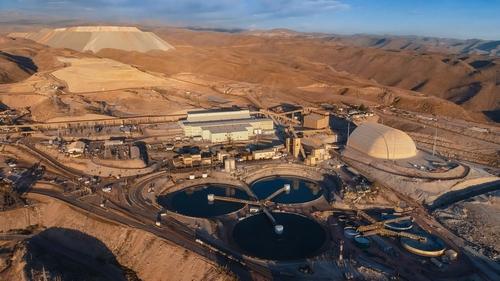
Mining operations are safety-critical, remote, and constantly changing. Open pits evolve, haul roads move, underground tunnels expand, and the surrounding RF environment can change as operations progress. In this context, connectivity is not a convenience. It is part of the operational foundation for safety, automation, production control, and remote monitoring.
Private 5G/LTE networks are increasingly relevant for mines because they can provide reliable, secure, and predictable wireless connectivity across challenging environments. But designing these networks requires more than generic coverage planning. Mines require accurate terrain modelling, careful backhaul planning, support for underground environments, and a way to update the design as the site evolves.
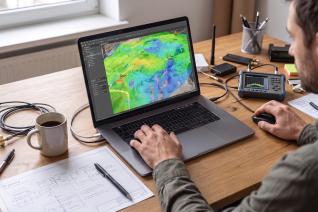
That is where Atoll comes in. The webinar showed how Atoll can be used to plan private 5G/LTE networks for mining environments, covering open-pit terrain, microwave links, underground tunnels, OEM equipment, and coverage analysis in a single planning workflow.
Why mining connectivity is different
Mines are not static sites. Unlike campuses, stadiums, or buildings, mining environments change over time. The open pit may deepen, terrain profiles may shift, and new underground areas may be added. These changes directly affect radio propagation, line-of-sight conditions, and coverage availability.
This creates several planning challenges:
- Coverage needs to follow the operational area as it evolves.
- Terrain data must be updated to reflect current and future mine geometry.
- Backhaul links must account for line-of-sight obstructions.
- Underground tunnels and chambers require dedicated modelling.
- Safety-critical services need reliable coverage in both surface and underground zones.
For executives, the key point is simple: a mine network that is not planned accurately can create operational risk. Coverage gaps can affect worker communications, connected equipment, automation systems, and remote operations.
The role of private 5G/LTE in mining
Private 5G/LTE networks can support a unified approach to mining connectivity. Instead of relying on multiple disconnected systems for different applications, a private mobile network can provide a common wireless foundation for critical operational use cases.
These use cases may include:
- Worker and vehicle connectivity.
- Remote monitoring and control.
- Automation and connected equipment.
- Video, sensors, and operational data.
- Safety communications and situational awareness.
The value of private 5G/LTE is not only the radio technology itself. It is the ability to design a controlled, reliable network that is tailored to the mine’s operational geography and future evolution.
Why planning matters before deployment
A private network in a mine must be planned with a high degree of confidence. The webinar demonstrated that mining environments require planning tools that can combine several dimensions of network design:
- Outdoor coverage over complex terrain.
- Open-pit modelling using terrain and contour information.
- Microwave backhaul planning and line-of-sight analysis.
- Underground tunnel and chamber design.
- Equipment modelling based on real components.
- Coverage prediction and optimisation.
Without this level of planning, deployment decisions can become reactive. With accurate modelling, teams can identify coverage gaps, evaluate site locations, and anticipate constraints before field deployment.
How Atoll helps de-risk mining network planning
Atoll provides a carrier-grade radio planning environment that supports the types of workflows shown in the webinar. The demonstration highlighted several capabilities relevant to mines.
First, Atoll can use terrain data and contour information to represent open-pit environments. This helps planners account for changing elevation and mine geometry when evaluating coverage and line-of-sight conditions.
Second, Atoll supports microwave link planning, including analysis of potential obstructions. This is particularly important for remote mine sites where backhaul connectivity may depend on carefully selected radio paths.
Third, Atoll can model underground environments, including tunnels and chambers. This allows planners to evaluate both surface and underground coverage within the same broader planning context.
Finally, Atoll supports equipment-based design workflows, helping network teams work with antennas, radiating cables, amplifiers, splitters, and other components as part of the planning process.
Business outcomes for mining stakeholders
For mining executives and operational decision-makers, the business case for accurate private network planning is built around risk reduction and operational continuity.
A well-planned private 5G/LTE network can help support:
- Better connectivity for operational teams and equipment.
- Improved confidence in safety-critical coverage.
- More predictable deployment decisions.
- Reduced risk of coverage gaps in complex areas.
- A network design that can evolve with the mine.
The webinar’s central message is that mining networks need a planning approach that reflects the real environment. Atoll helps teams move from assumptions to model-based decisions.
Conclusion
Private 5G/LTE networks are a strong fit for mining environments because they can provide reliable and controlled connectivity for safety, automation, and operations. But the quality of the network depends heavily on the quality of the planning.
Mines change over time, and their RF conditions change with them. Atoll gives planners a way to model those conditions, evaluate design options, and plan both surface and underground connectivity with greater confidence.